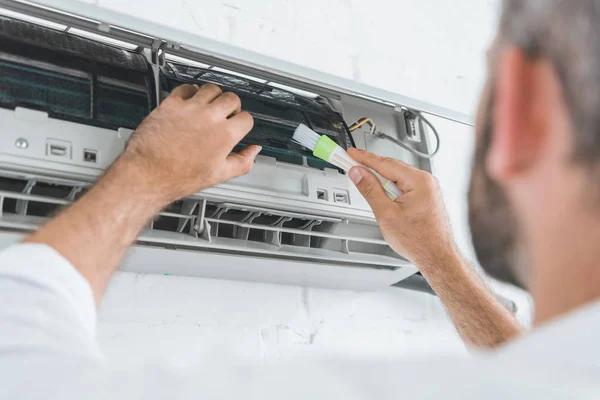

In recent years, the demand for efficient cooling solutions has led to the increased popularity of mini split air conditioning systems. These compact units offer flexibility, energy efficiency, and targeted cooling capabilities that make them an attractive option for both residential and commercial spaces. However, to maximize their performance and ensure optimal cooling, advanced installation techniques are essential.
One of the primary considerations in installing a mini split AC system is selecting the right location for both indoor and outdoor units. Proper placement ensures efficient airflow and minimizes energy consumption. The indoor unit should be mounted high on a wall where it can distribute cool air conditioning repair evenly across the room without obstructions such as furniture or curtains. Meanwhile, the outdoor unit requires a well-ventilated area with sufficient clearance around it to facilitate heat dissipation.
Proper insulation of refrigerant lines is another crucial aspect of advanced installation techniques. Insulating these lines reduces thermal loss during operation, enhancing overall system efficiency. High-quality insulation materials should be used to wrap these lines securely from end to end, ensuring there are no gaps or exposed sections that could lead to energy inefficiency.
Furthermore, precise calculation of refrigerant charge is vital for optimal performance. Incorrect refrigerant levels can result in poor cooling capacity or even damage to the compressor over time. Utilizing digital gauges and scales allows technicians to measure refrigerant accurately during installation, ensuring that each system operates at peak efficiency according to manufacturer specifications.
Advanced wiring techniques also play a significant role in successful mini split AC installations. Ensuring proper electrical connections not only guarantees safety but also prevents potential operational issues down the line. Technicians must adhere strictly to local electrical codes while utilizing appropriate wire gauges and connectors suitable for handling specific voltage requirements associated with different models.